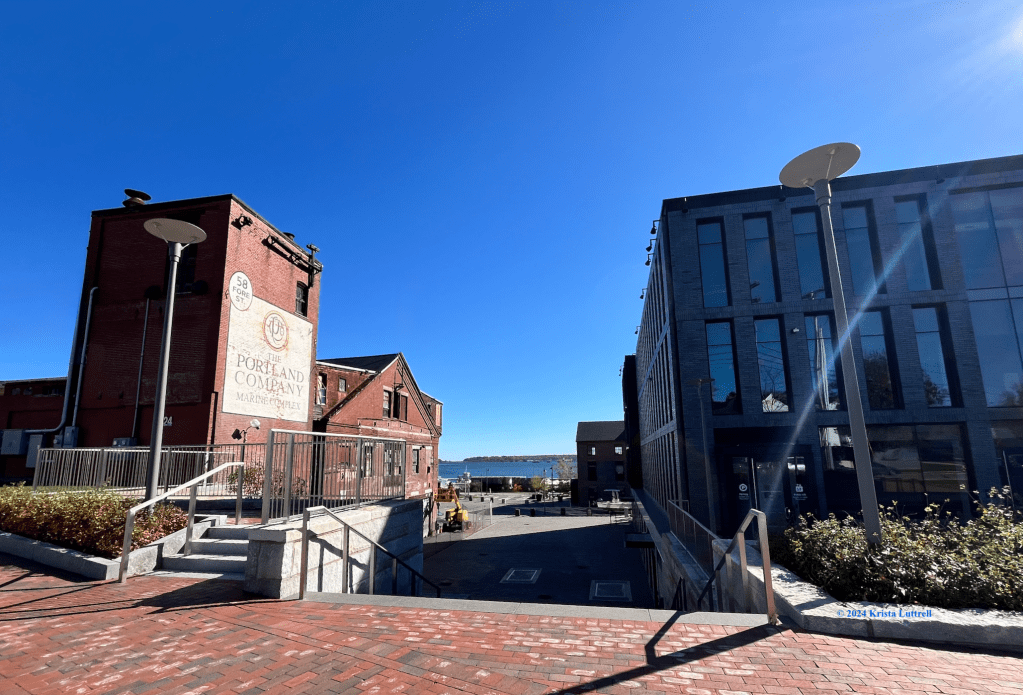
If you stand on Munjoy Hill in Portland, Maine, and look towards the Casco Bay waterfront, you’ll see the brick and stone remnants of the old Portland Company rising up from Fore Street. In the 1800s, this was the city’s biggest employer, a large factory that made locomotives, steam engines, and other heavy machinery. Most of its workers were Irish immigrants who had crossed the Atlantic, hoping for a better life than one filled with famine, oppression, and extreme poverty, as in what they left behind.
While Portland had two major Irish neighborhoods, these immigrants settled in the one on the lower portion of Munjoy Hill, and in its base around the Cathedral of the Immaculate Conception. Here they were close to the busy factories where they worked and to one another. Their neighborhood became a replica of the various communities in Ireland they came from, filled with familiar faces, a shared mother tongue and dialect of English, and a shared memory of where they had come from and why they had left.
Ireland is an island country about the same geographical size as the state of Maine. And, like Ireland, Maine was and still is predominantly rural. The majority of Irish refugees left agricultural work in quiet, green landscapes to settle in noisy, rapidly growing cities, like Portland, during the era of the Industrial Revolution. In the 1850s, my ancestor, Michael J. Burke, was one of them. He joined several older siblings and his mother, who had arrived in America a few years before him, and it was they who likely paid for his ocean passage.
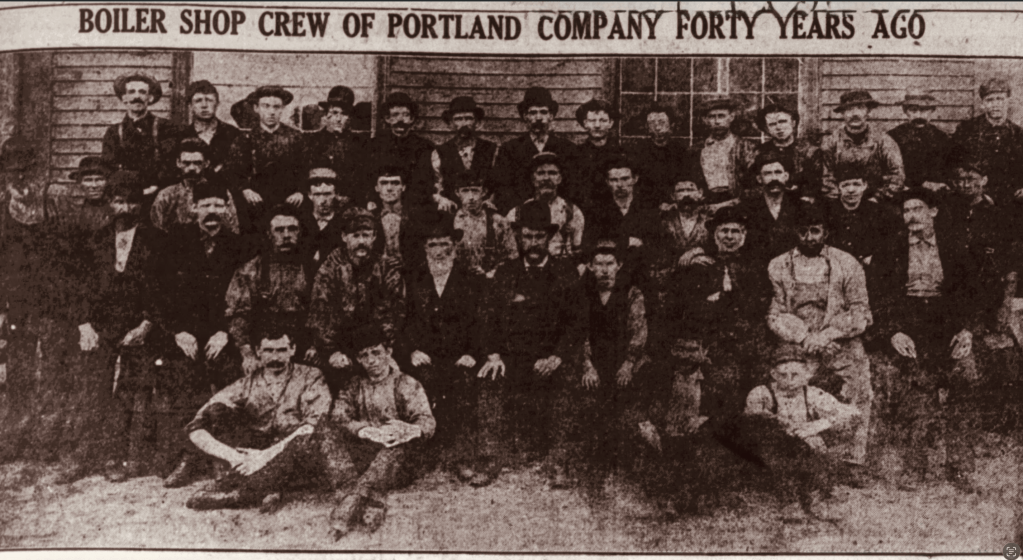
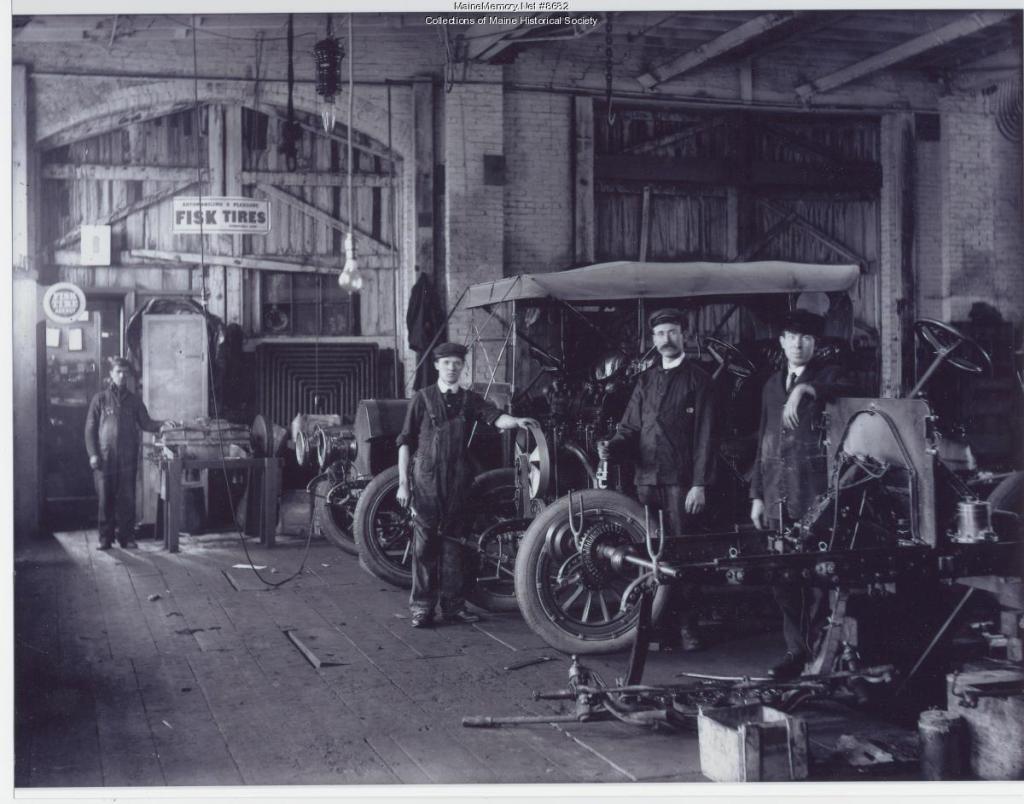
Work at The Portland Company was tough and exhausting. Irishmen toiled long hours, often with little waking time off to do anything else. Their meager earnings were enough to support their families and living costs. They didn’t have much, but when they could, they shared the little extra they had. And, they were proud to do so. Charitable organizations, such as the Irish American Relief Association, established by the Irish community, also sprang up. Organizations like this helped collect remittances to aid struggling fellow members of the Maine Irish community and to send funds to loved ones across the Atlantic.
If remittances went toward a ship’s passage, a paper ticket to America may have offered the greatest chance of survival for some loved ones, such as a brother, a sister, a parent, a cousin, a friend, or a neighbor. They, too, made the same ocean passage and embarked on a new life journey of their own. One person would arrive, find work at The Portland Company, the Railroad, a factory or mill, or elsewhere, oftentimes settling down into the same neighborhood on Munjoy Hill, and then begin the same cycle of saving and sending until another loved one could follow. And then another. And then another still.
Chain migration to Portland, this was. In this way, the Irish community on Munjoy Hill grew steadily over the decades, knit together not just by proximity but by the extraordinary lengths its people went to support one another. They understood, from their own experiences, exactly what it meant to arrive in a strange city in a foreign land with little more than desire in their hearts and a belief they too would make it. And so they reached back, again and again across the Atlantic, to bring others forward with them. Chain migration across generations, and, in some families, as in Michael’s, lasted well into the next century, and it was fully supported by an honestly earned day’s pay from a job at the Portland Company.
Thank you for reading.
♥︎ Krista
Feature Photo: Remnants of The Portland Company. © 2024 K. Luttrell

 Krista Luttrell
Leave a reply to loudlyquirkyef5f35f578 Cancel reply